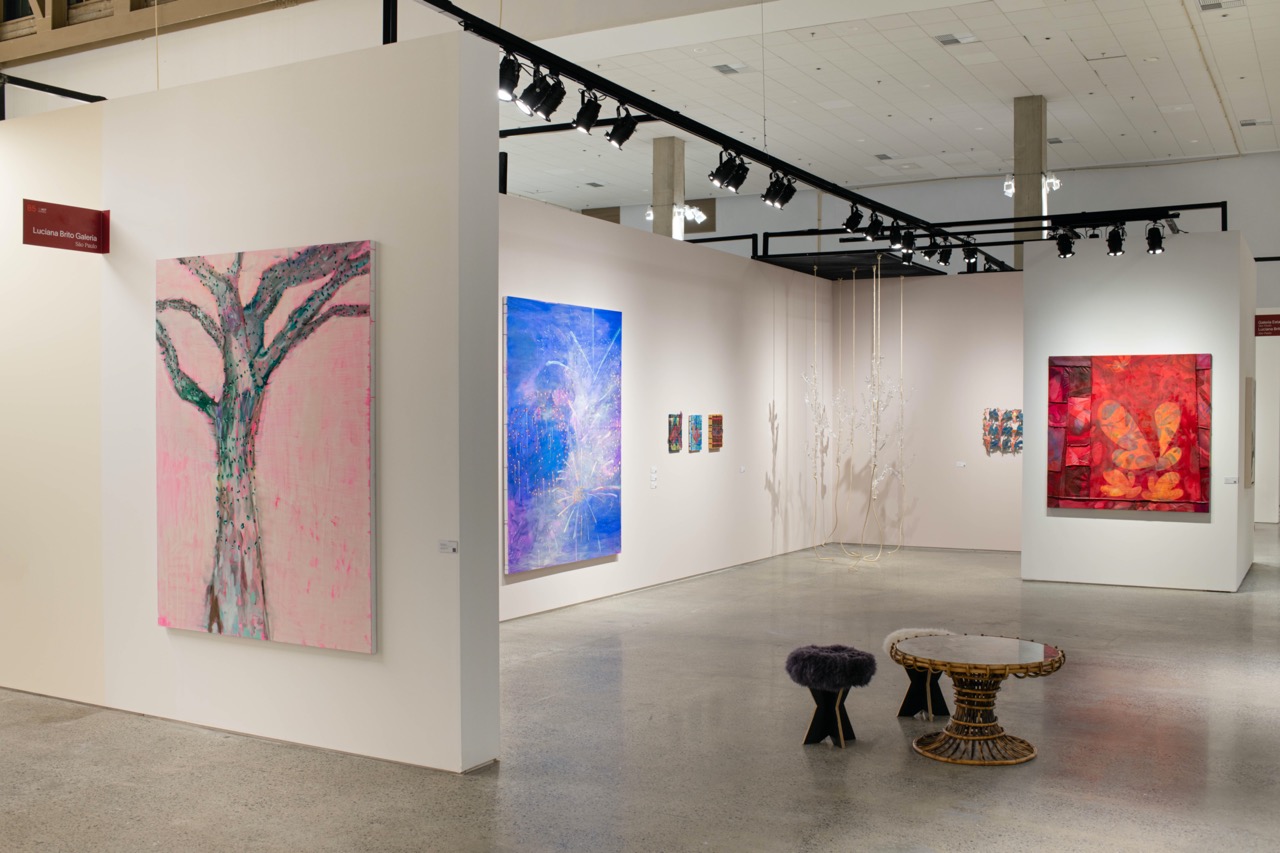
The dialogue between the works of Santídio Pereira and André Barion for ARPA 2026 reveals a singular encounter between different ways of constructing landscape, memory, and organicity within the field of contemporary Brazilian art. Although formally distinct, the works presented share a common sensibility toward time, materiality, and the transformation of natural elements into poetic structures.
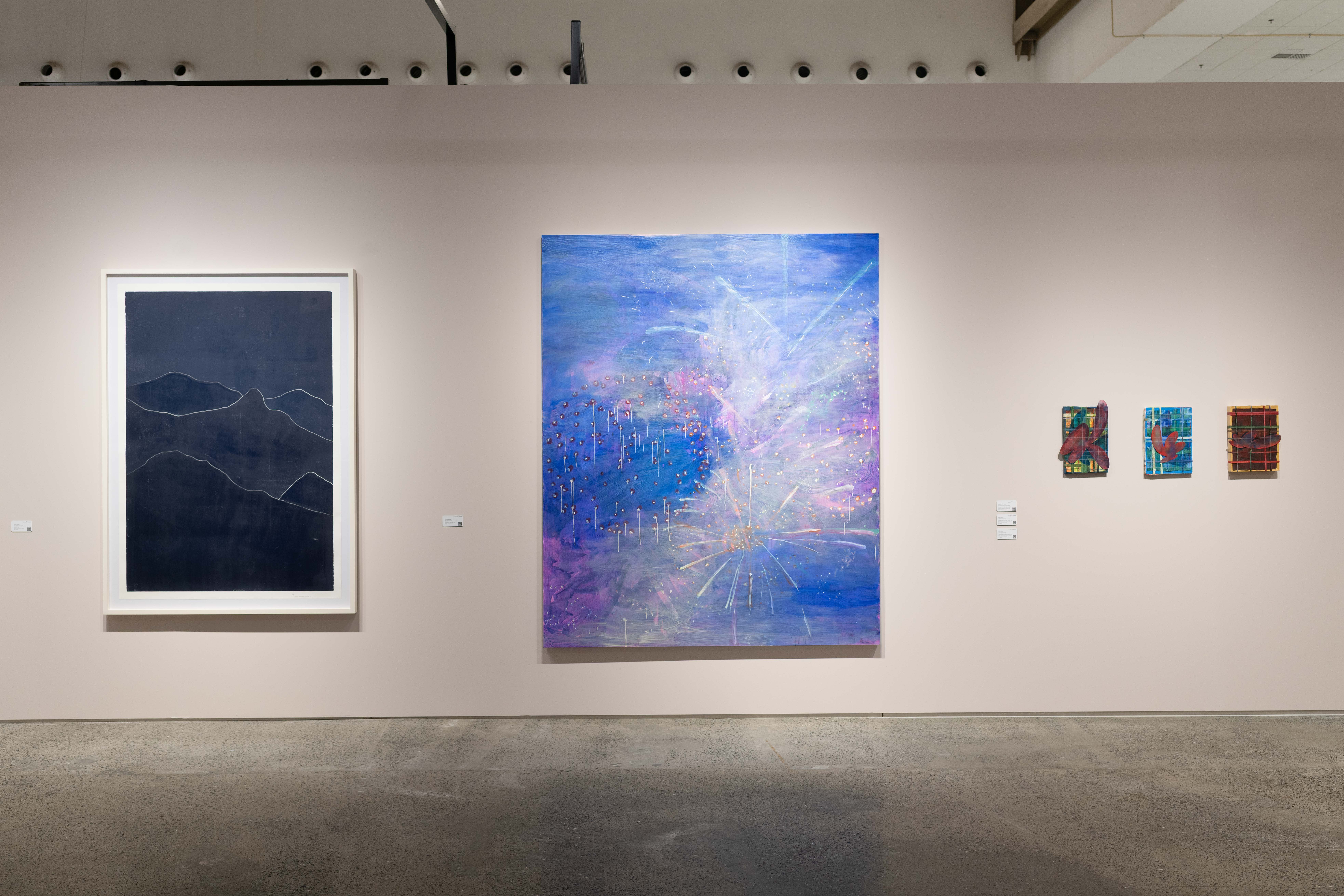
In Santídio Pereira’s monumental untitled blue woodcut (2026), printed on cotton paper and presented as a unique work, landscape is reduced to minimal lines and deep tonal vibrations. The artist transforms the tradition of woodcut printmaking into an expanded field in which the graphic gesture ceases to function merely as representation and instead becomes atmosphere. The white lines crossing the intense blue surface evoke mountains, horizons, and geographical formations, while simultaneously suggesting inner journeys and states of silent contemplation.
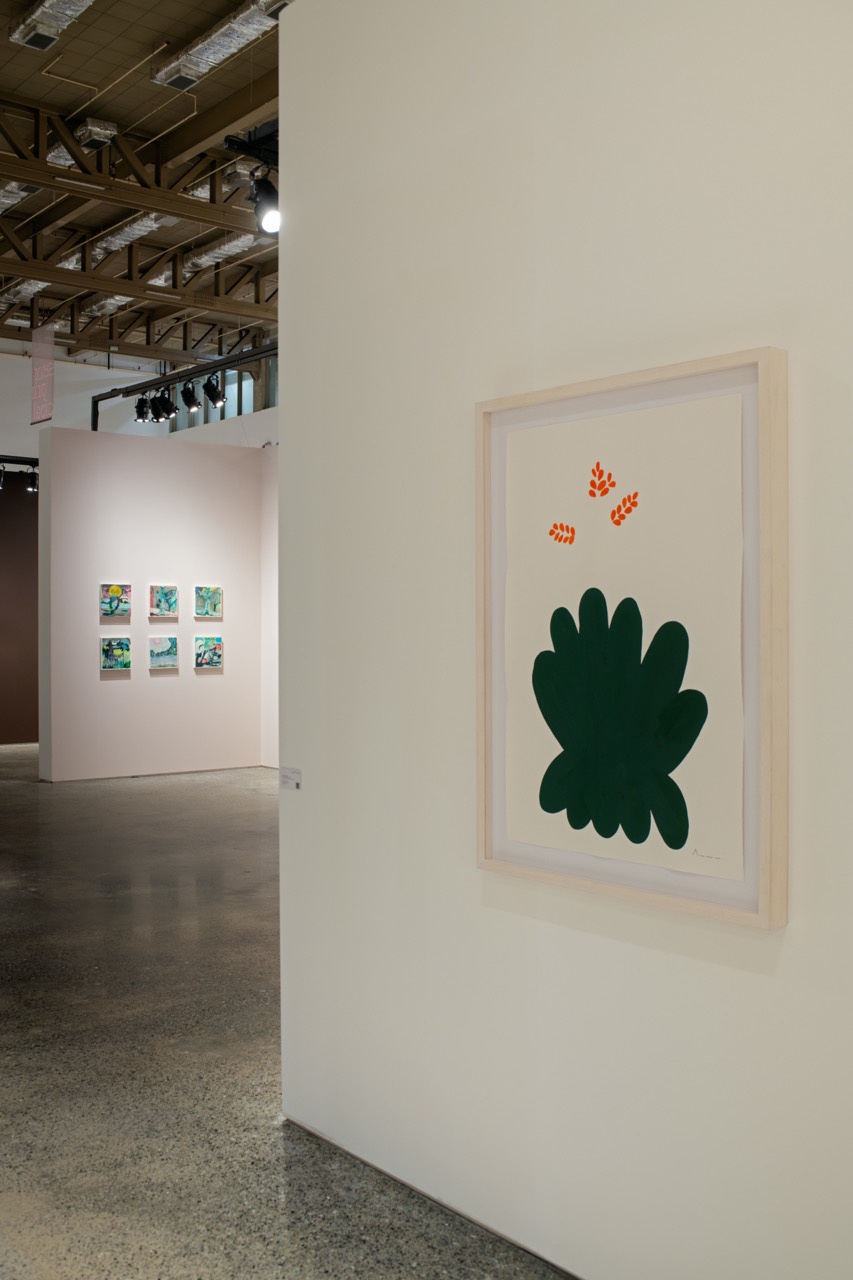
The gouache Untitled (2025), also by Santídio Pereira, further expands this understanding of landscape as poetic synthesis. Unlike the silent monumentality of the blue woodcut, the gouache operates through formal condensation and chromatic delicacy. Against the emptiness of the paper, organic green forms coexist with small orange elements that evoke flowers, seeds, or suspended vegetal fragments. The composition reveals a visual language marked by economy of means and the potency of restrained gesture, bringing nature closer to an intimate, almost meditative experience. In this work, Santídio transforms the pictorial field into a space of breath and suspension, where figure and landscape seem to emerge simultaneously.
Santídio Pereira’s practice stems from a continuous observation of nature and of the world’s different biomes. His recent production reflects an increasingly intense interest in organic forms, the rhythms of landscape, and the attempt to understand what remains invisible or incomplete within human experience. There is, in his work, a constant search to fill something that is missing — an attempt to reconnect memory, territory, spirituality, and the sensitive perception of the natural world. This investigation unfolds through woodcuts, drawings, paintings, and objects, in which the artist constructs silent and deeply contemplative atmospheres.
Recently, the artist returned from an artistic residency in Angola, an experience that further expanded his contact with different geographies, cosmologies, and modes of relating to landscape. He will soon travel to a new residency in the Atacama Desert, Chile, between May 15 and 20, 2026, continuing his research into the sky, the Milky Way, and constellations — central themes of his latest solo exhibition at Galeria Estação in 2025. In these recent investigations, the artist brings together astronomical observation and spiritual experience, treating the cosmos as a symbolic extension of the terrestrial landscape itself.
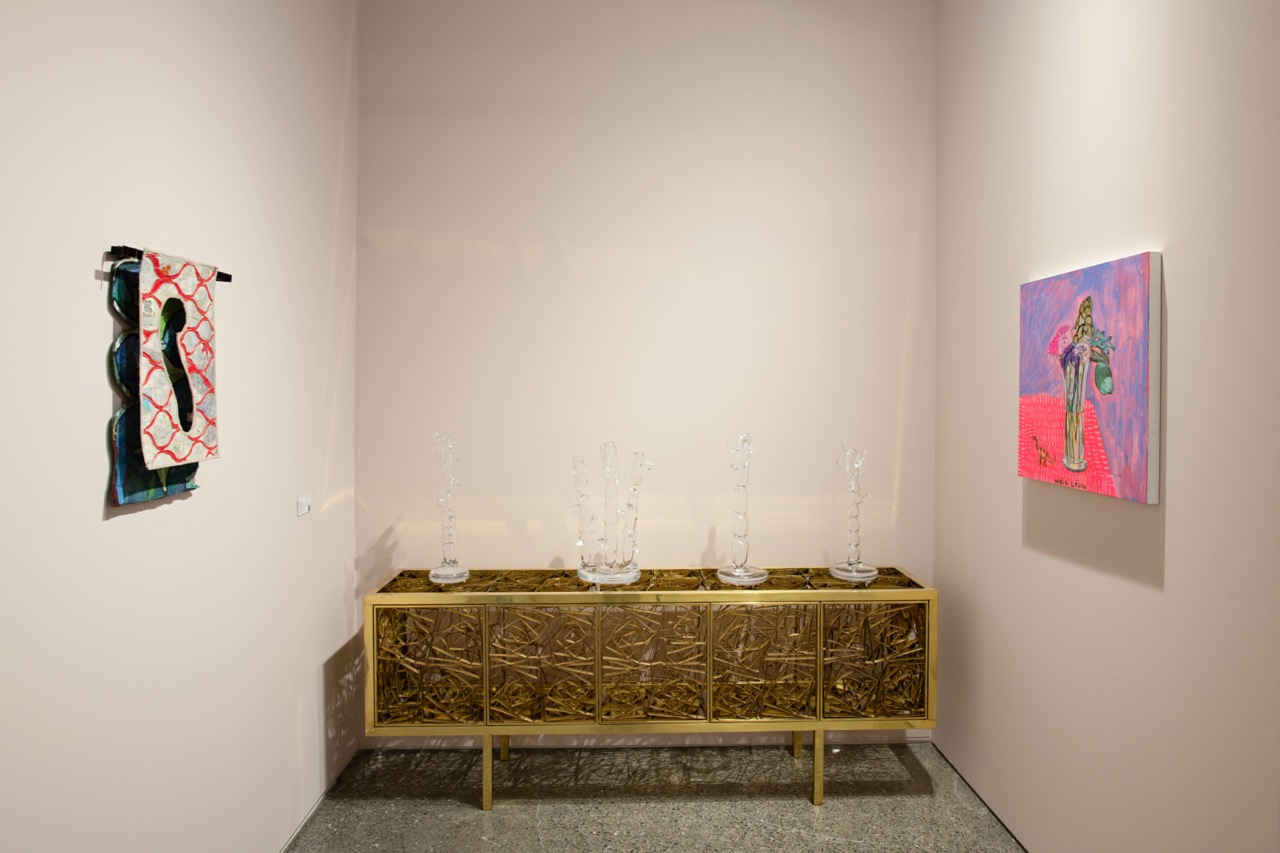
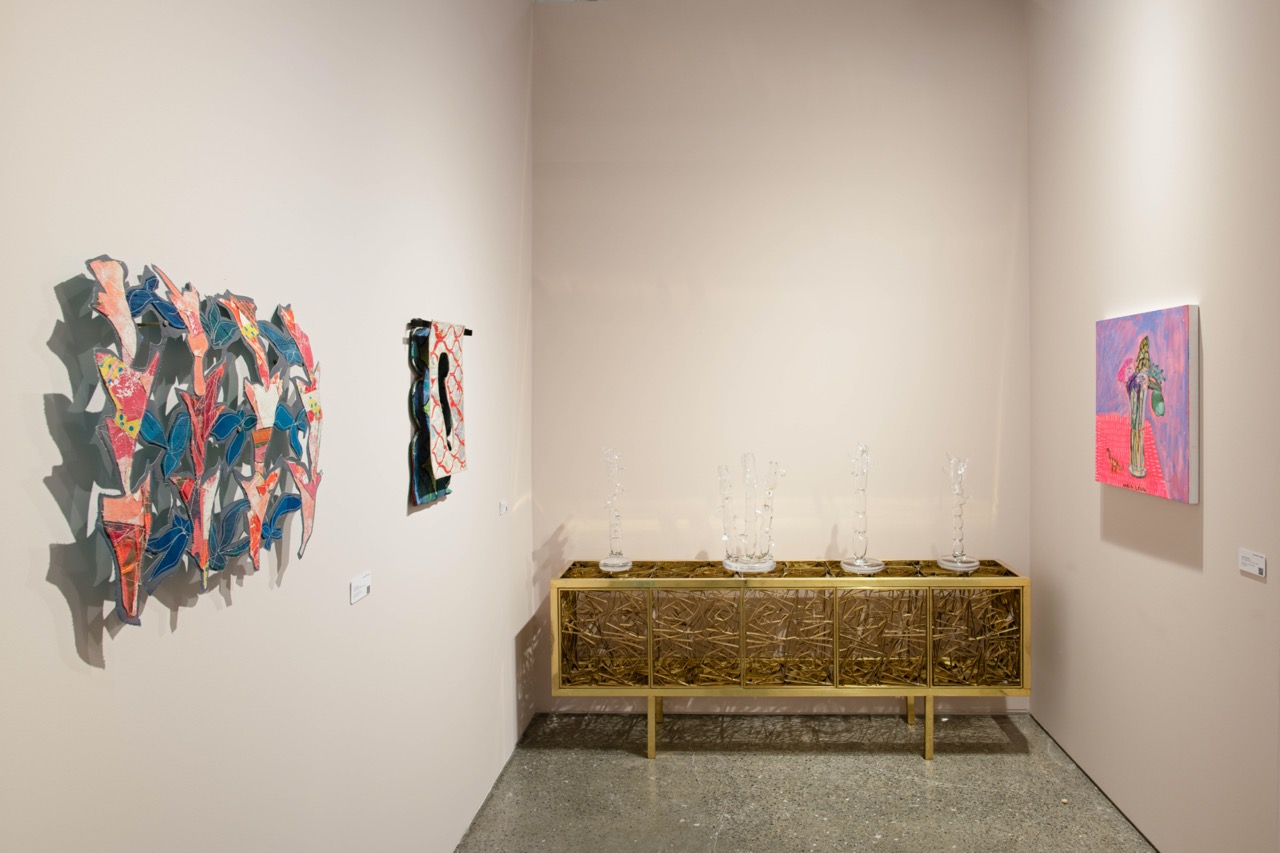
André Barion, in turn, constructs a fragmented and organic universe through fabrics, stitching, cuts, and layered surfaces. In works such as Komorebi II (2025) and the series In the Winged Floral Night Without Butterflies, Rumors of the Future Whisper (2025), floral forms and hybrid structures seem to oscillate between vegetation, body, and architecture. His works possess a tactile and almost biological dimension, as though they were organisms in constant mutation. Stitching ceases to be a mere technical procedure and instead assumes the character of drawing, scar, and connection.
Barion works with sewing techniques to unite fabrics of different qualities in order to construct sculptural objects. Through this process, he seeks to generate visual interest on the surface while addressing questions related to the relationship between object and viewer, fetish, and seduction. His manipulation of materials originates in an interest in tapestry and also appears in installations and paintings, creating a pictorial space that simultaneously flirts with figuration — through forms derived from nature — and abstraction, through the use of graphic patterns and ornamental structures.
Currently, the artist is participating in the group exhibition TODO CUIDADO É POUCO at Residência Fonte, curated by Tálisson Melo. The exhibition remains on view through May 28, 2026, and highlights the deepening of his research into textile materiality and the construction of sensorial spatialities. On October 6, 2026, André Barion will inaugurate his next solo exhibition at Galeria Estação and will subsequently depart for an artistic residency at CASA Atelier, coordinated by Jade Matarazzo, where he will remain until December 15, 2026. The two-month immersion will focus on the development of his recent research.
The dialogue between the two artists emerges precisely within this territory where landscape ceases to function as description and instead operates as sensitive experience. In Santídio’s work, nature is condensed into synthesis and silence; in André Barion’s, it explodes into fragmentation, color, and organic growth. Both artists, however, approach the idea of surface as a living field: Santídio’s engraved wood carries traces of time and matter, while André’s textiles preserve marks of construction, tension, and layering.
There is also an important generational dimension to this encounter. Born in 1996, both artists develop distinct ways of revisiting Brazilian material traditions — woodcut printmaking and textile practice — without resorting to nostalgia. On the contrary, both update these languages through contemporary procedures that bring together drawing, objecthood, and spatiality.
At ARPA 2026, this dialogue creates a powerful counterpoint between containment and expansion, silence and proliferation, emptiness and occupation. The works relate not through immediate formal resemblance, but through a shared and profound investigation into matter, memory, and the poetic construction of nature within the context of contemporary Brazilian art.